
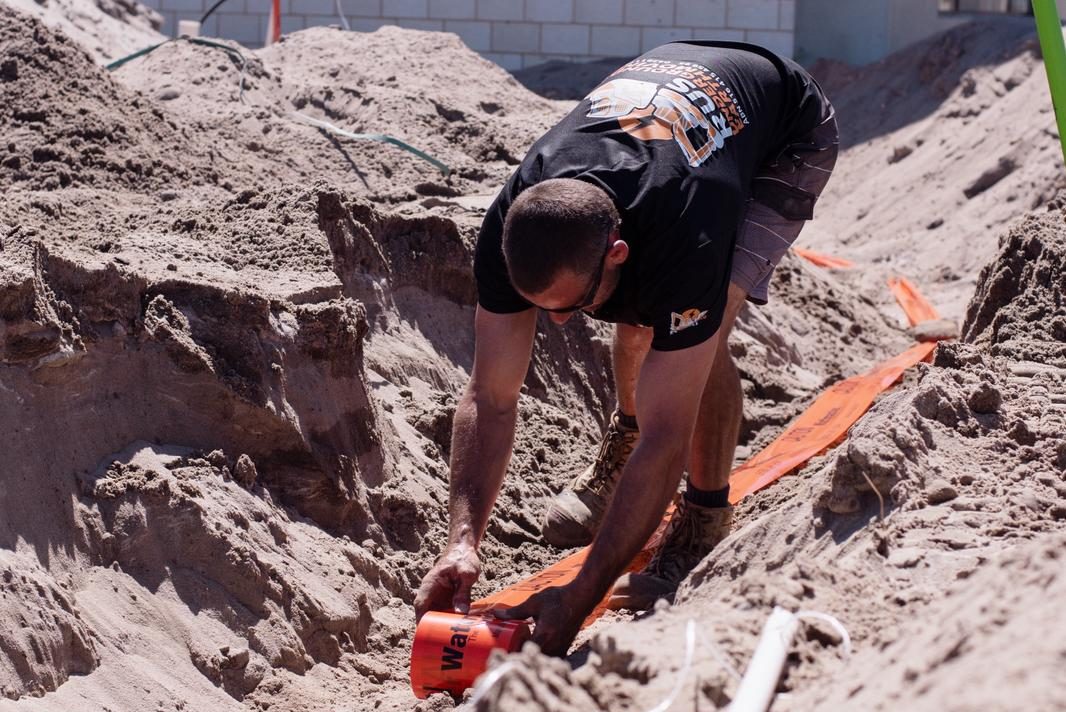
If you’re planning any excavation, trenching or earthmoving work in Western Australia, Dial Before You Dig WA is one of the most important steps you can take before a single bucket of soil is moved. It sounds simple — and in many ways it is — but the consequences of skipping it can range from costly utility damage and project delays to serious injury or worse. Whether you’re a homeowner putting in a garden path, a builder preparing a new residential site, or a contractor undertaking civil works, understanding this process could save you thousands of dollars and keep your team safe.
What Is Dial Before You Dig?
Dial Before You Dig WA — now officially known as Before You Dig Australia (BYDA) — is a free, not-for-profit referral service that helps anyone planning to dig understand what underground infrastructure lies beneath their work site. The service connects you with the owners of underground assets in your area, who then provide plans and safety information specific to your project location.
Underground infrastructure in Western Australia includes a wide range of services: electrical cables, gas mains, water and sewer pipes, telecommunications lines, NBN conduits and more. Many of these are not visible from the surface and are not always where you’d expect them to be. A standard residential block can have multiple services running across it — some of which may not even be recorded on council maps.
The service is free to use and available to anyone — from individual homeowners to large-scale contractors. There’s genuinely no reason not to use it.
Why It Matters for Perth and WA Projects
Western Australia has a wide variety of property types and project scales — from tight inner-city Perth subdivisions to sprawling rural acreage blocks in the hills and south-west. Underground services are present across all of them, and the consequences of striking one can be severe.
Hitting a live electrical cable during excavation can be fatal. Severing a gas main can trigger explosions or evacuations. Cutting through a water main can flood a site, damage neighbouring properties and result in significant repair costs. Damaging a Telstra or NBN conduit can knock out communications for an entire street — and the repair bill will land with whoever caused the damage.
Beyond the immediate safety risks, there are significant financial and legal implications. If you damage underground infrastructure because you failed to submit a Dial Before You Dig WA enquiry, you may be liable for the full cost of repairs, which can run into tens of thousands of dollars. Contractors can also face project shutdowns, insurance complications and reputational damage.
How the Process Works
The process is straightforward and takes only a few minutes to complete online.
1. Submit your enquiry Visit the Before You Dig Australia website (byda.com.au) and submit an online enquiry. You’ll need to provide details about your project location, the type of work being carried out, and the planned start date. The system uses your site coordinates to identify all registered underground asset owners in the vicinity.
2. Asset owners are notified Your enquiry is automatically sent to every registered utility and infrastructure owner with assets near your dig site. They review your request and respond directly to you with plans, drawings and safety information relevant to their specific infrastructure.
3. Review the plans You’ll typically receive a PDF report from each relevant utility owner. These plans show the known location of underground services in the area. It’s important to review each response carefully — don’t just file them away unread.
4. Allow enough lead time It’s recommended to submit your Dial Before You Dig WA enquiry at least two to three business days before you plan to start work. For larger or more complex projects — particularly those near transmission assets or where services may need to be relocated — you should allow 30 days or more.
What the Plans Don’t Cover
This is a critical point that many people overlook. The plans you receive show the location of registered underground assets. They do not always capture:
- Private services — electricity leads to sheds, irrigation lines, privately installed gas connections and similar infrastructure are often unrecorded
- Old or decommissioned services — disused pipes or cables that are no longer active but are still physically in the ground
- Inaccurate records — the location of some older infrastructure may be marked only approximately, not precisely
This is why the plans should be used as a starting guide, not a guarantee. On any project, a professional contractor should still use physical service location methods — such as potholing or cable detection equipment — to verify the exact position of underground assets before mechanical excavation begins.
Who Is Responsible?
Both property owners and contractors carry responsibility here, and it’s worth being clear about each party’s role.
For property owners: If you’re engaging a contractor to carry out earthmoving, trenching, pool excavation or any other digging work on your property, it’s worth confirming with your contractor that they have submitted a Dial Before You Dig WA enquiry before work begins. A reputable contractor will do this as a matter of course — but asking the question protects you as the property owner too.
For contractors: The obligation is clear. Submitting an enquiry before any excavation work is standard industry practice and is required under most council, government and utility compliance frameworks in WA. It also forms part of your duty of care obligations under occupational safety and health legislation. No responsible earthmoving operator should ever break ground without it.
Common Situations Where It Applies
You might be surprised how many everyday projects fall within the scope of Dial Before You Dig WA requirements. Common examples include:
- New residential builds — trenching for electrical mains, communications and sewer connections
- Pool installations — excavation on residential blocks where service locations can be unpredictable
- Land subdivision — bulk earthworks and site preparation involving multiple service connections
- Rural property development — acreage lots often have water bores, private power leads and irrigation infrastructure that isn’t mapped
- Landscaping and fencing — even fence post holes can strike a cable if the site hasn’t been checked
- Firebreak construction — rural clearing and grading across paddocks and property boundaries
- Driveway and access work — particularly where works cross road reserves or verges
If it involves digging — at any depth — it pays to check first.
Tips for a Smooth Process
A few practical points to keep in mind:
- Lodge early. Don’t leave it until the day before. Give yourself at least three business days, more for complex sites.
- Be accurate with your location details. Incorrect coordinates mean utility owners may not respond, leaving gaps in your information.
- Read every response. It can be tempting to skim through the plans, but each utility owner’s response contains specific information relevant to their assets. Review all of them.
- Keep records. Save your enquiry confirmation and all responses. If a dispute or insurance claim arises later, having documentation that you followed the correct process is invaluable.
- Don’t assume clear means safe. If the plans show no assets in your area, that doesn’t necessarily mean there are none — it may simply mean none are recorded. Treat the plans as a starting point, not a guarantee.
How RUS Underground & Earthmoving Handles This
At RUS, submitting a Dial Before You Dig enquiry is a standard part of our pre-project process on every job — whether it’s a straightforward residential trench in Perth’s northern suburbs or a larger earthmoving project in a rural area. We won’t break ground without knowing what’s below.
It’s one of the things that separates professional contractors from those who cut corners. Proper groundwork isn’t just about getting the job done — it’s about doing it safely, responsibly, and without creating problems that end up costing our clients more down the track.
If you’re planning a trenching, earthmoving, land clearing or excavation project in Perth or across Western Australia and want to work with a team that takes safety and process seriously, get in touch with RUS for an obligation-free quote.
Call: 0429 117 559 | rus-wa.com.au